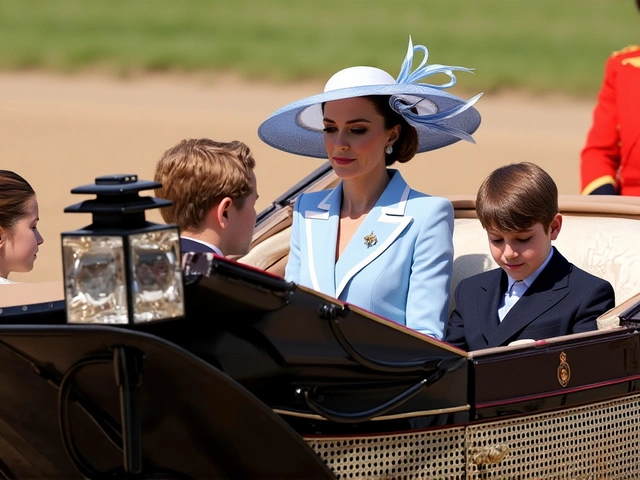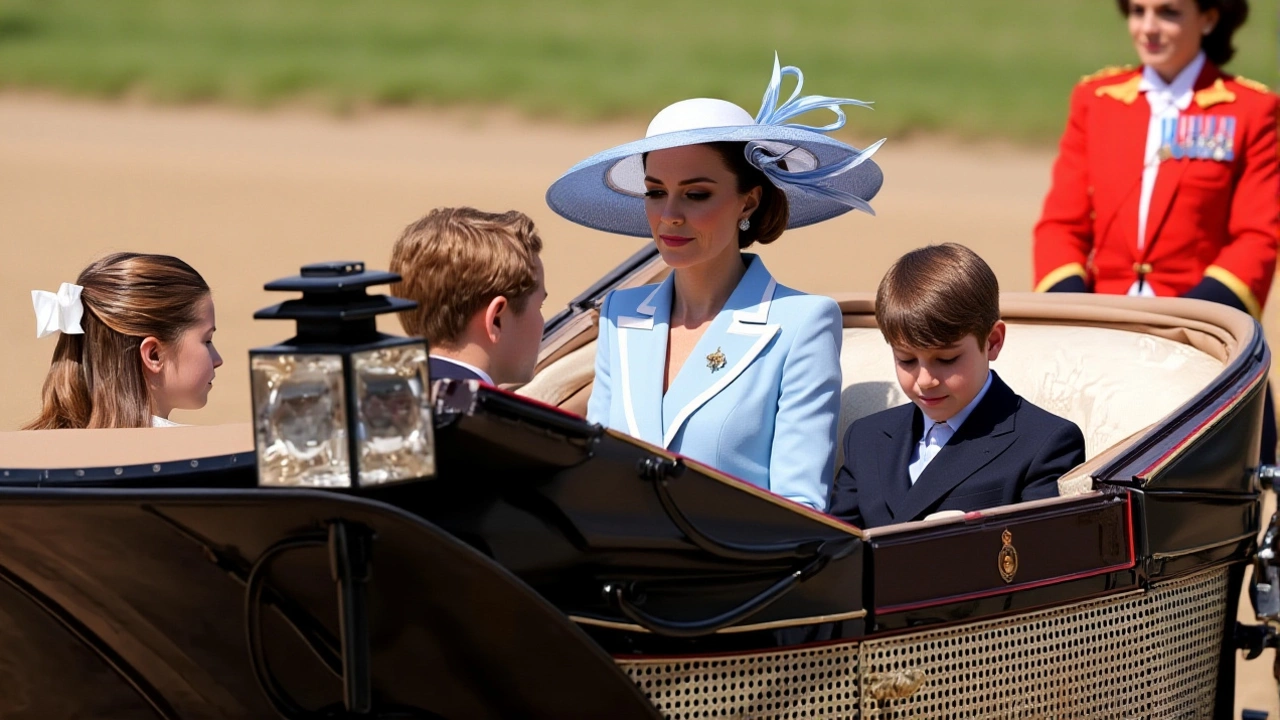
It’s supposed to be a day of pageantry, not protest. But on June 13, 2026, the traditional pomp of King Charles III’s official birthday parade took a sharp turn when Catherine, Princess of Wales and her children were met with boos and jeers from anti-monarchists lining The Mall in London. The incident, which unfolded during the annual Trooping the ColourLondon ceremony, has sparked intense debate about the monarchy’s place in modern Britain.
The Princess of Wales, 44, was riding in a carriage alongside her husband Prince William’s three children: Prince George, 12; Princess Charlotte, 11; and Prince Louis, 8. As they made their way toward Buckingham Palace, a group of demonstrators shouted slogans including “not my king” and “not my queen.” The contrast between the ceremonial music and the hostile chants created a jarring moment that quickly went viral.
A Visible Shift in Demeanor
Here’s the thing about royal protocol: composure is everything. Kate Middleton, known for her poised public appearances, didn’t break character, but she certainly didn’t smile through it either. Reports from People magazine describe her giving the protesters an “icy look,” a subtle but unmistakable signal that she was not amused. The Daily Express noted that while she maintained her dignity, her expression turned serious as the booing continued.
The impact on the children was perhaps more telling. Witnesses and media analysts pointed out that the smiles faded from the young royals’ faces almost instantly. Prince George, usually seen waving enthusiastically, appeared visibly uneasy, shrinking slightly into his seat. It’s a raw reminder that despite their privileged status, these are still kids navigating a world where public opinion can turn sharply against them.
William’s Separate Role
While Kate and the children faced the brunt of the crowd’s ire in the carriage, Prince William was elsewhere. He participated in the parade on horseback, a tradition that keeps him somewhat removed from the direct line of fire during the procession. However, he later joined his family on the balcony of Buckingham Palace for the flypast. Interestingly, the mood shifted dramatically once they reached the palace steps. Cheers from supporters largely drowned out the earlier dissent, suggesting that while anti-monarchy sentiment exists, it remains a vocal minority rather than a majority view.
Viral Reactions and Expert Commentary
The footage of the booing spread rapidly across social media platforms within hours. By June 16, clips were being analyzed by commentators everywhere. TV host Jeremy Vine weighed in on Instagram, describing Kate’s reaction as “terrifying” in its coldness—a characterization that some found supportive of her stoicism, while others deemed overly dramatic. Meanwhile, many users praised the Princess of Wales for her restraint, calling it a masterclass in handling public hostility.
This isn’t an isolated incident. SheFinds notes that similar protests occurred just months prior, in March 2026, during the Commonwealth Day service at Westminster Abbey. That event also saw booing directed at royal attendees, indicating a growing pattern of organized dissent rather than sporadic outbursts. The consistency of these actions suggests coordinated efforts by anti-monarchy groups to challenge the institution’s relevance.
Why This Matters Now
Turns out, the monarchy’s popularity isn’t static. While the institution retains broad support, especially among older demographics, younger generations are increasingly questioning its value. The “smallest crowd” narrative mentioned in recent YouTube commentary hints at declining engagement or active boycotts. For King Charles III and the wider royal family, this presents a strategic challenge: how to maintain tradition while addressing contemporary concerns about inequality and representation.
The booing at Trooping the Colour serves as a stark indicator of shifting tides. It’s no longer enough to simply appear; the monarchy must engage meaningfully with a changing society. Whether this leads to reform or further erosion of public trust remains to be seen, but one thing is clear: the days of unquestioned reverence are over.
Frequently Asked Questions
What exactly happened to Kate Middleton at Trooping the Colour?
On June 13, 2026, Catherine, Princess of Wales, was booed by anti-monarchy protesters while riding in a carriage along The Mall in London with her children. Demonstrators chanted phrases like “not my king” and “not my queen,” creating a tense atmosphere during the ceremonial parade.
How did Prince William react to the incident?
Prince William was participating in the parade on horseback and was not in the carriage with his wife and children during the booing. He later joined them on the Buckingham Palace balcony for the flypast, where cheers from supporters largely overshadowed any remaining dissent.
Were the royal children affected by the protests?
Yes, reports indicate that the children’s smiles faded as the booing continued. Prince George, in particular, appeared uneasy and uncomfortable, highlighting the emotional impact such public displays can have on even the most sheltered individuals.
Is this the first time the royals have been booed recently?
No, this follows a similar incident in March 2026 at the Commonwealth Day service in Westminster Abbey, where anti-monarchy protesters also voiced their discontent. These events suggest a growing trend of organized opposition to the monarchy.
What did experts say about Kate’s reaction?
TV host Jeremy Vine described her reaction as “terrifying” due to her icy demeanor, while other commentators praised her composure. Many viewed her silence and serious expression as a dignified response to unprovoked hostility.